
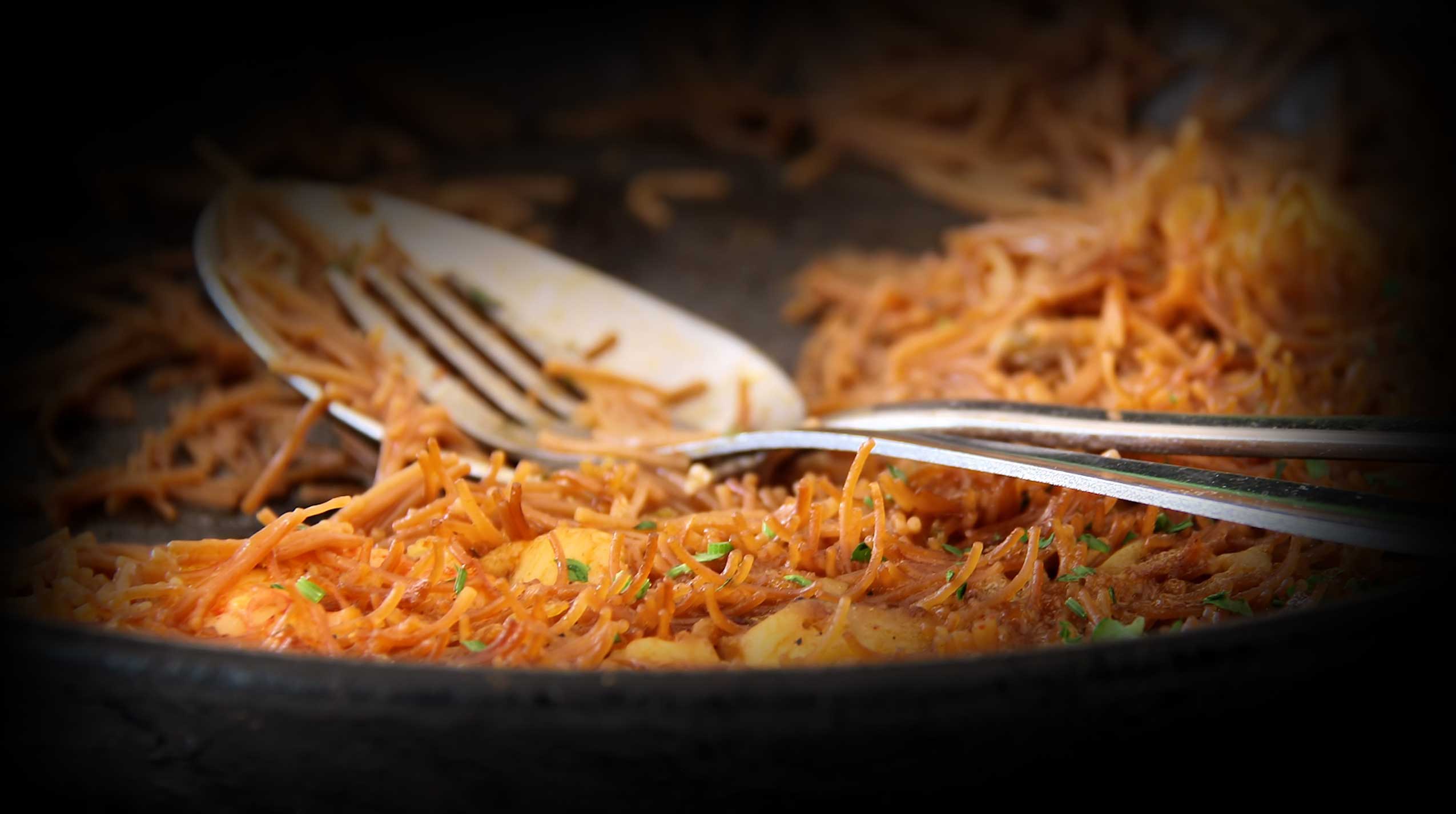
Just like paella, fideuá has Spanish origins, more specifically from the coastal city of Gandia, about 50 km south of Valencia. Several stories attempt to trace its invention. It is generally attributed to a fisherman, who was also a cook in his spare time at sea, who replaced the traditional rice with fideuá noodles in his paella.
The Origins of Fideuá
The word “fideuá” means “large quantity of noodles” in the Valencian dialect. The Valencian language is a Romance language, very similar to Catalan (which is itself very close to Occitan, a French regional language). It is recognized and spoken in the Valencian Community in Spain, where it coexists with Castilian.
“Fideua” therefore defines the very characteristics of this dish: a large quantity of prepared noodles. The origins of the dish are quite controversial. It is said that fideuá was born from a concoction prepared by a cook on a fishing boat located in the port city of Gandia. Wanting to prepare a traditional paella but not having any rice, he replaced the rice with pasta. And fideuá was born!
The story is not verifiable and should therefore be interpreted more as storytelling! What is certain is that it originated in the Spanish Valencian country!
Preparing Fideuá
The preparation of a fideuá is very similar to that of a paella. The ingredients are very close and the cooking method is almost identical.
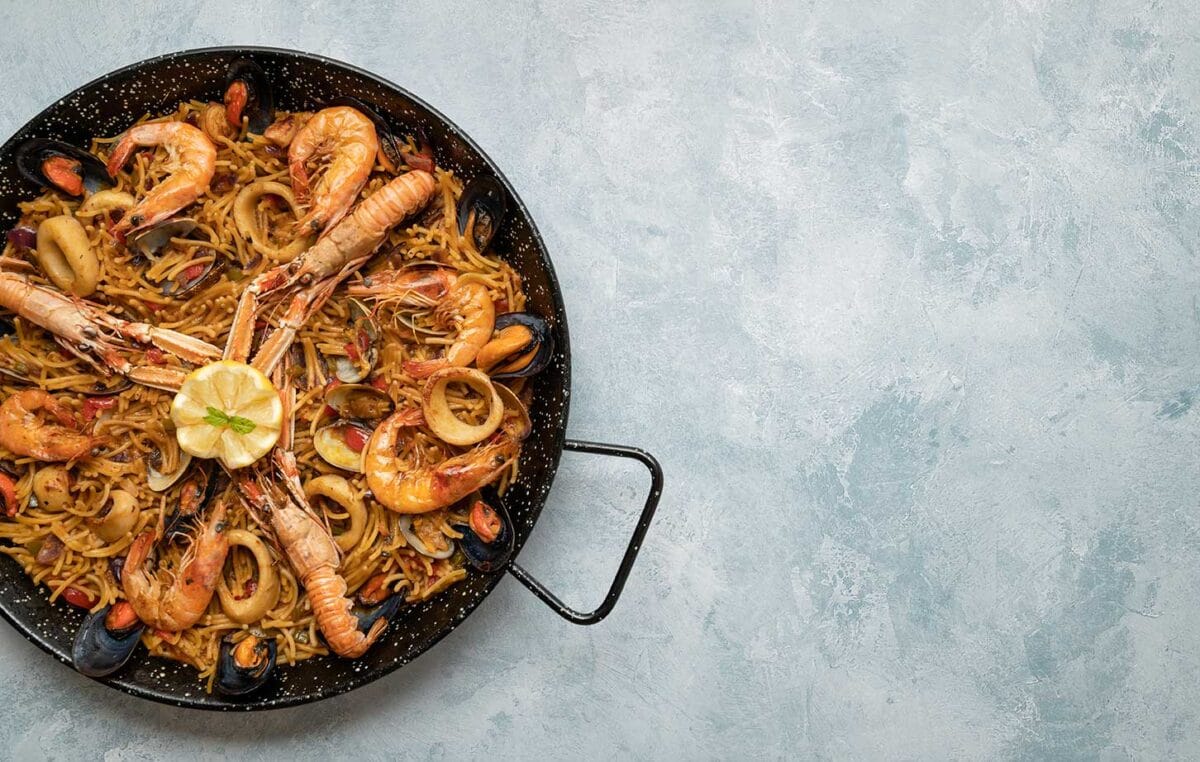
To cook a fideuá, you need:
- noodles (which look like vermicelli but are not),
- monkfish, the only fish present in a fideuá
- different crustaceans: prawns, cuttlefish, langoustines, mussels, etc.
- an excellent rock fish broth (a suquet de peix)
It is prepared in a paella pan (or paellera), which is the Spanish name for a paella pan. The preparation is very similar to that of a paella, although some details are different. Find our detailed step-by-step fideuá recipe.
What are the differences between fideuá and paella?
The difference between paella and fideuá lies mainly in the ingredients used. Paella always uses rice, while fideuá only uses noodles. Paella exists in different forms: with seafood, meat and fish (mixed paella), vegetarian, etc. Fideuá generally only uses fish and seafood. Meat is not present.
Are fideuá noodles vermicelli?
No, they are not exactly vermicelli, although they look like it. They are called fideos. These noodles can vary in thickness and size from one brand to another. Elles ont des numéros allant de 0 à 5 permettant de les catégoriser en fonction de leur taille. Elles existent aussi en version courbée, ressemblant à des coquillettes. Les cuisiniers choisissent souvent les fideos de catégorie 4 ou de catégorie 3. On trouve parfois des fideos dans les supermarchés au rayon spécialités du monde. On peut aussi les commander dans des boutiques en ligne spécialisées. Les fideos s’accompagnent souvent d’un aïoli.
Can you put meat in a fideuá?
There is no meat in the original fideuá recipe. It exclusively contains crustaceans and fish. Even the broth is a fish suquet. However, a recipe is not set in stone. You can adapt it according to your tastes!
What wine to drink with a fideuá?
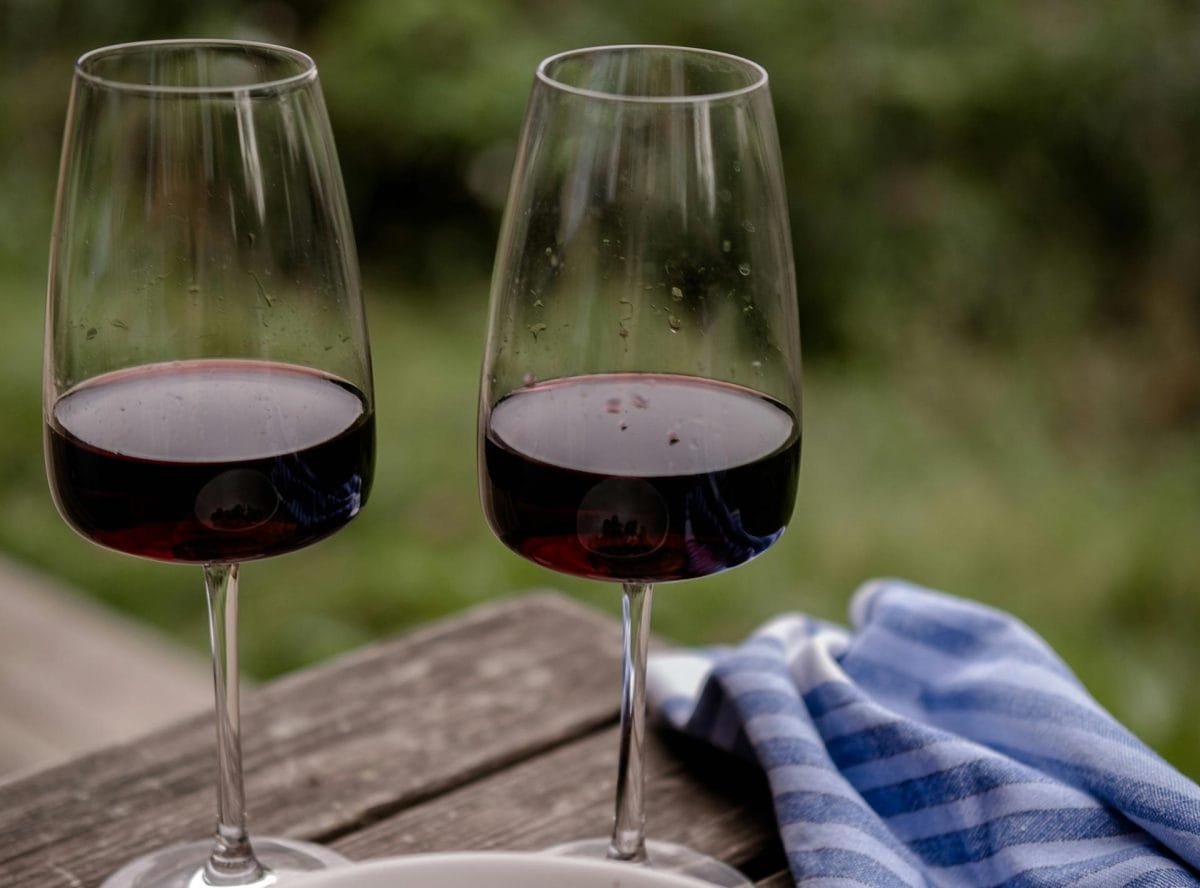
Fideuá is composed only of fish and crustaceans. You might think that a fideuá-white wine pairing is appropriate. However, the best food-and-wine pairings for a fideuá lean towards red and rosé wines.
Red Wines
Many Spanish red wines can accompany your fideuá. Rioja reds (Spain) are a very good choice, as are Bierzo (Spain) . In France, you can go for a Saint-Chinian (Languedoc, France), a Côtes-du-Rhône (Rhône Valley, France), a Pic-Saint-Loup (Languedoc, France), or a Côte-du-Roussillon (French Catalonia, France), for example. Many other regions, grape varieties, and appellations are suitable for this popular Spanish dish.
Rosé Wines
Many French and Spanish rosé wines are suitable for fideuá. You can look at rosés from Costières de Nîmes (Languedoc, France), a Corbières rosé (Languedoc, France), a Patrimonio (Corsica, France), or a Provence rosé (Provence, France). Spanish rosé wines are also excellent, especially rosés from the Valencia region (Spain), and rosés from Rioja (Spain).


