
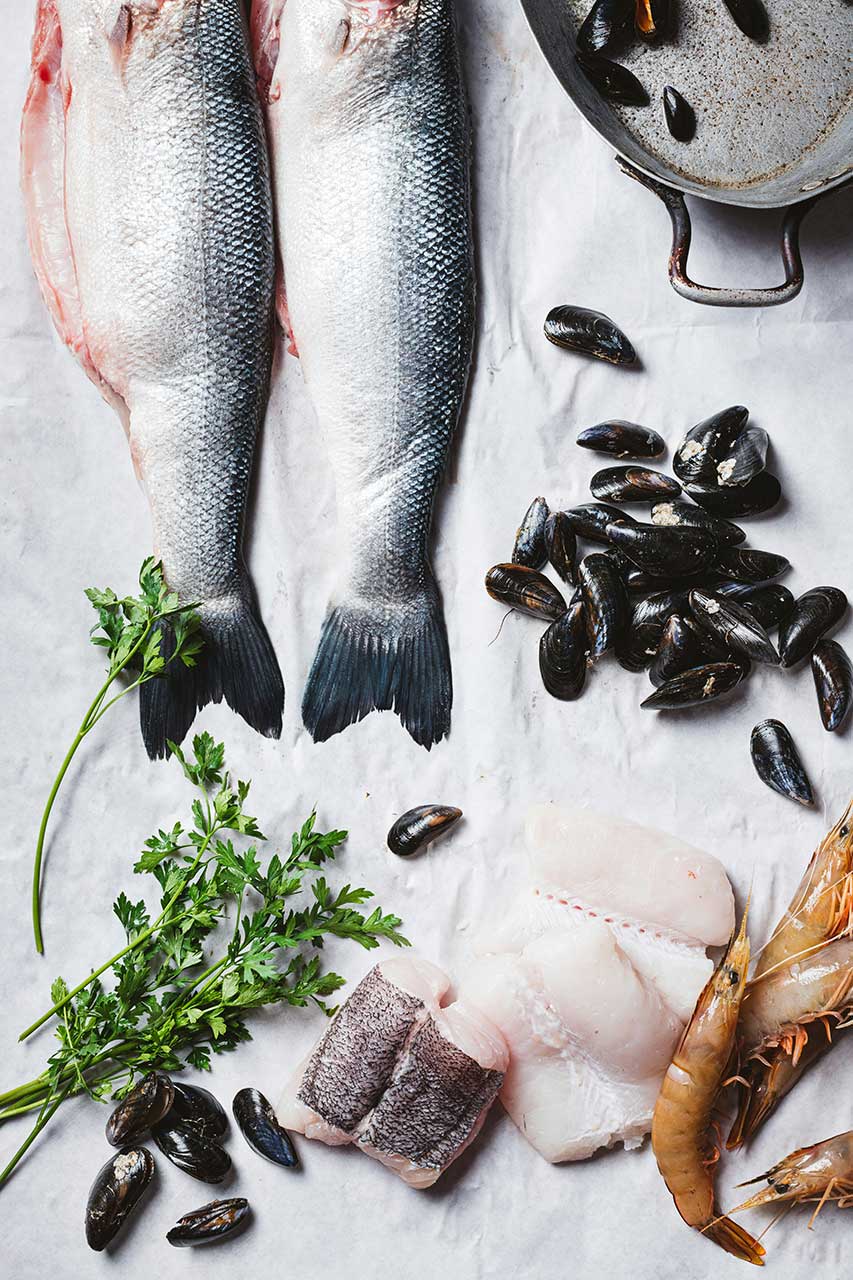
Paella, the iconic dish of Spanish gastronomy, is prepared with fish and shellfish. While some recipes, like the Paella Valenciana, follow a very specific list of ingredients, most paellas are adapted according to tastes, regions, or family traditions. Fish, shellfish, and seafood play an important role in the flavor of this dish. Which seafood products should you choose? In what quantities? How can you avoid preparation mistakes?
Selecting Your Fish and Shellfish
There are original paella recipes with clearly defined ingredients. This is the case for Paella Valenciana, which is now protected by a Dénominacion de Origen, the equivalent of a Protected Designation of Origin (PDO). his recipe includes a precise list of ingredients. However, there are hundreds of paella recipes, all different from region to region, family to family, and cook to cook. Paella can be 100% seafood, land and sea, made with both meat and fish, or vegetarian, for example.
Paella is a popular Spanish dish. It was originally prepared by farmers working in the rice fields of the Valencia region. They would create this delicious rice dish with local, seasonal products.
How Much Fish and Shellfish Should You Use in a Paella?
In general, it’s best to limit yourself to just a few types of fish and shellfish. If your paella is a mixed variety (with both meat and fish), it’s recommended to use one or two types of meat and a maximum of three or four types of fish and shellfish. It is the element that is accompanied by other ingredients, not the other way around! The same rules apply to fideuà.
| Fish & Shellfish | Meats | |
|---|---|---|
| Land and Sea Paella | 3 to 4 types of fish and shellfish | 2 to 3 types of meats |
| Seafood Paella | 4 to 5 types of fish and shellfish | – |
| Paella with black rice, or squid ink | 4 to 5 types of fish and shellfish | – |
Managing the Cooking of Fish and Shellfish
Each seafood item has its own specific cooking time. Don’t place all the ingredients in the pan at the same time. You need to take each ingredient’s cooking time into account to avoid overcooking. When you’re just starting out, it’s a good idea to cook each category of food separately, then set them aside until the rice is cooked.
Which Fish to Add to a Paella?
For fish, we generally prefer white fish such as sea bream, sea bass, monkfish, albacore tuna, or cod. You can also use bluefin tuna and swordfish. Make sure to only use cleaned fillets with no bones, as they could disappoint your guests.
Sea bass and Sea bream
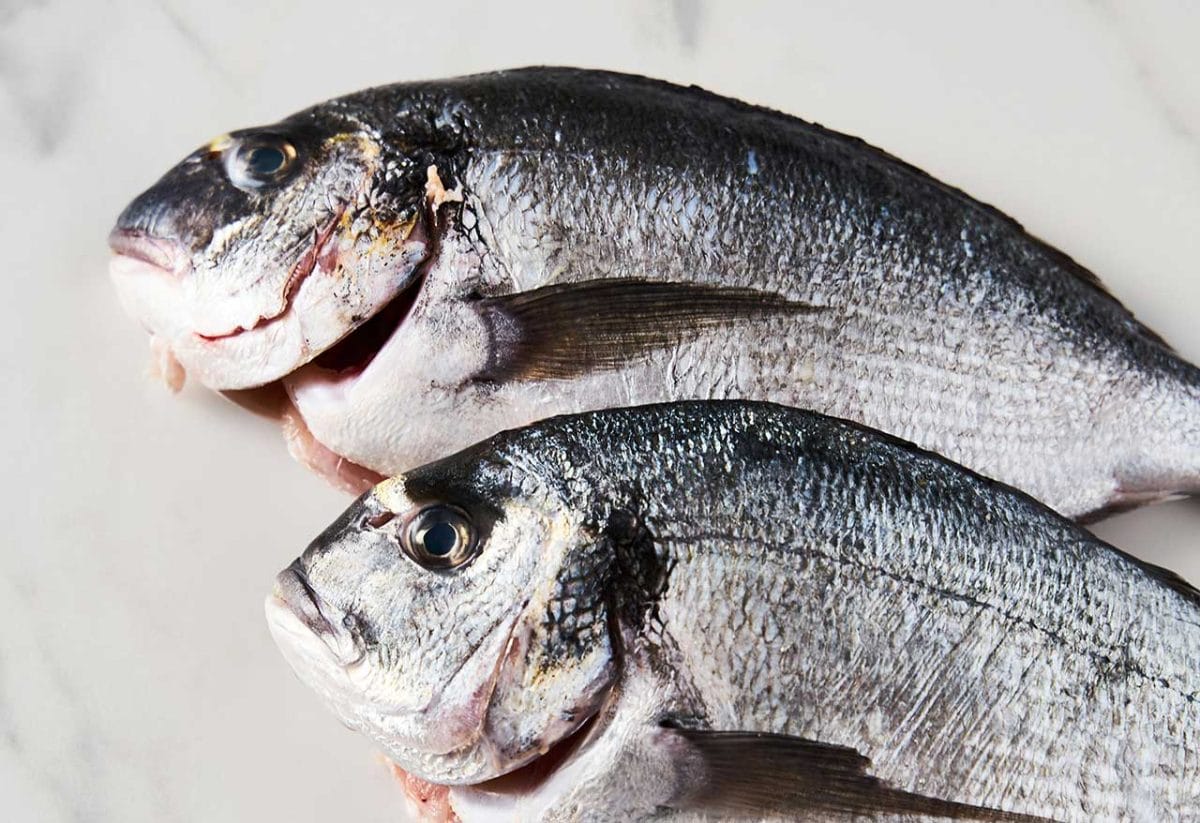
These are the fish most commonly used in paella. You can find them at any fishmonger. You need to fillet them and remove all the bones, as they might disappoint your guests. Be careful, as these fish have delicate flesh. Cook them separately, set them aside, and only add them at the end of the cooking process. Some cooks sear the fillets separately, then “chop” them over the rice at the end of cooking to get small pieces.
Monkfish
Monkfish is perfectly suited for paella. Its main drawback is its price, which puts off many consumers. It has firm flesh that holds up well during cooking. It’s an ideal fish for any simmered dish, just like we do with paella when cooking the rice.
Swordfish and Tuna (White or Red)
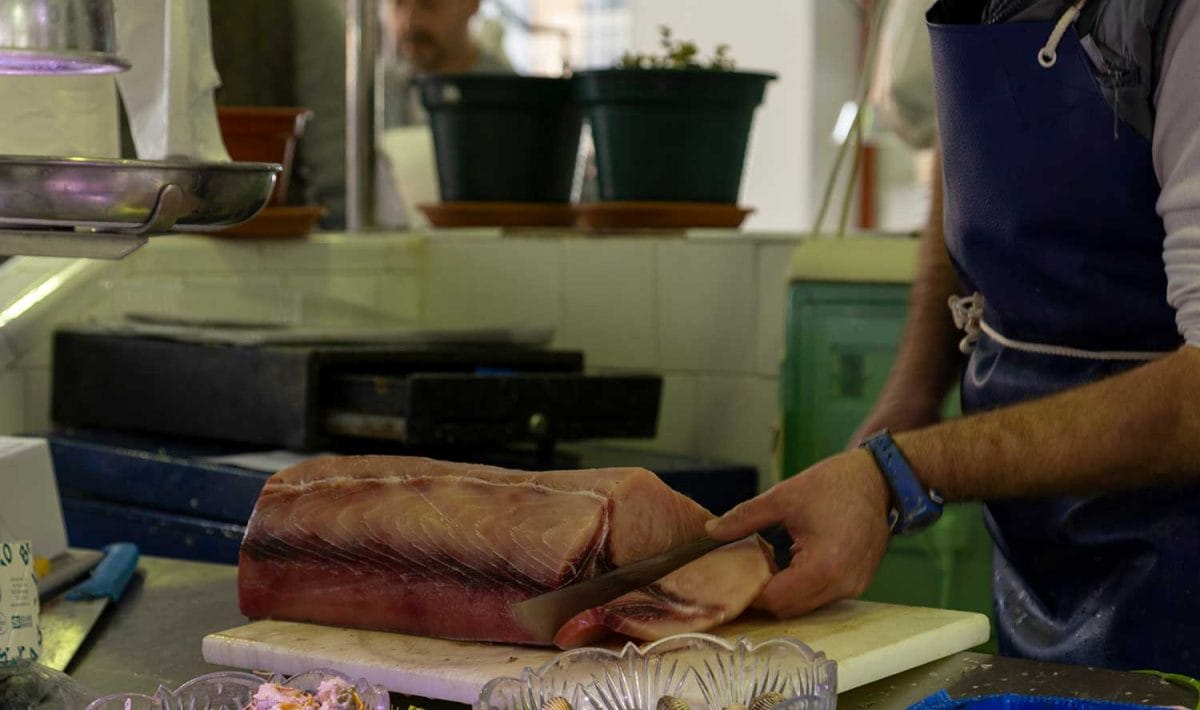
Here are two other fish that can be added to a paella. These are fish with dense flesh. Swordfish has a stronger taste than tuna. Be careful, as their cooking must be well-controlled. Sear them separately from the other fish. Add them at the end of the paella preparation to prevent the flesh from drying out.
Cod and Hake
Some people opt for cod and hake, which is a possibility if you can’t find anything else. Try to find fresh pieces of fish if possible; it’s better than frozen. Cod and hake are fish regularly consumed in households. They are suitable for people who rarely eat fish. The downside of these two fish is that they tend to fall apart when cooked.
Other Fish
On trouve sur Internet des recettes de paëlla avec du saumon. You can find paella recipes with salmon online. Again, paella recipes are open to most ingredients. However, salmon is less suitable for paella. It is not a fish normally used to cook paellas. It’s better to stick with the fish mentioned above.
Also avoid mackerel and sardines. These fish have a very strong taste that could overpower the rest of the dish. Only choose them if you want a paella with their powerful flavors.
This makes sense, but you never know: breaded fish is forbidden. 😉
Which Shellfish and Seafood Can You Add to a Paella?
When it comes to shellfish, they can all be suitable for a paella! You’ll generally find mussels and prawns in any paella! But it’s also possible to use langoustines, cockles, squid, or clams. Whenever possible, choose fresh products over frozen ones! This helps you avoid a soft and watery texture.
Shrimp and Prawns
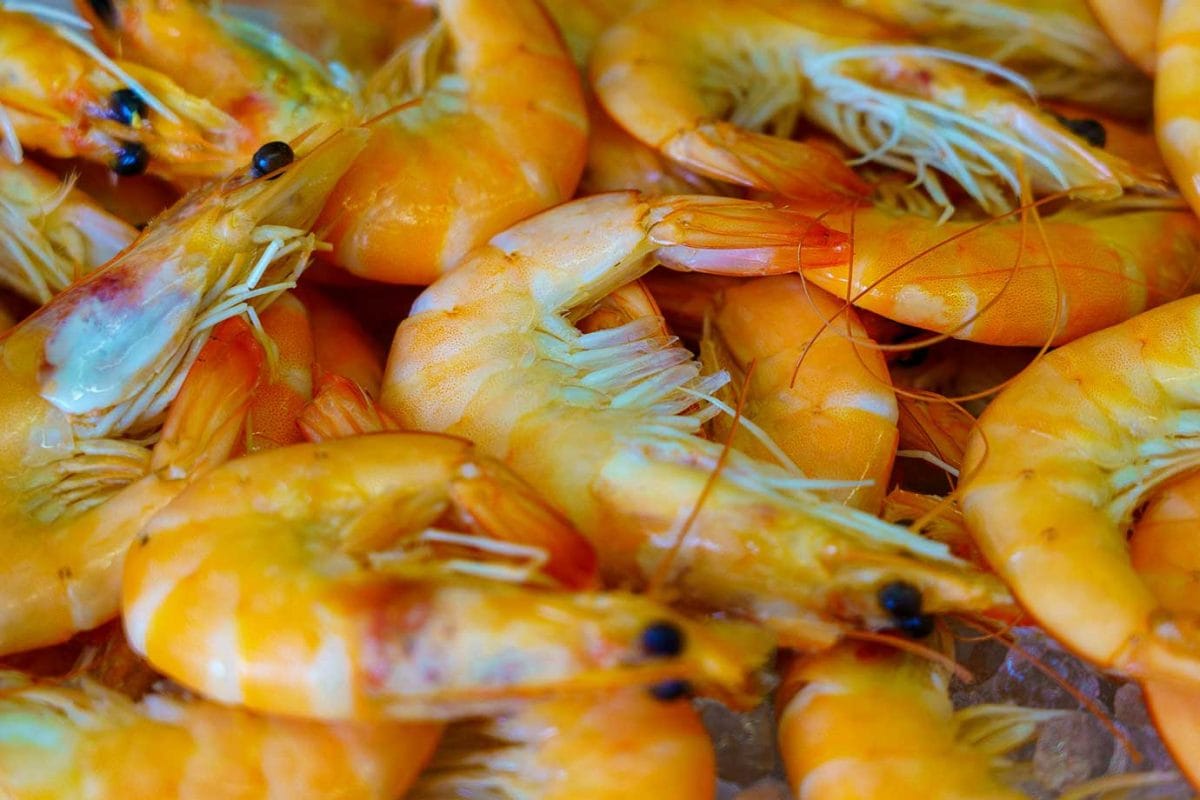
Pour la petite histoire, il n’y a pas de réelle distinction entre les crevettes et les gambas. For a bit of history, there is no real distinction between shrimp and prawns. They are the same crustaceans at different sizes and therefore different ages. Shrimp are caught smaller than prawns. In Spain, you only find prawns at the stalls. They don’t make the distinction made in France. They find our shrimp too small to be eaten! They only eat “gambas,” the Spanish term for this crustacean.
Whether they are shrimp or prawns, you’ll find them in the majority of seafood paellas. They are typical paella ingredients. Be careful when cooking them! If overcooked, the flesh becomes rubbery. This is why you should always sear them separately, then set them aside and add them only at the end of the cooking process.
Mussels
Like prawns, mussels are also a common ingredient in paellas. Their affordable price compared to other shellfish and fish makes them a top choice. Be careful to choose them well; mussels that are already open are a sure sign of a lack of freshness. Don’t forget to clean and debeard them. Debearding involves removing the “beard,” the bundle of fibers that come out of the mussel, also known as the byssus. If some mussels in your batch are already open, remove them. It is possible to use frozen mussels. However, be careful about the amount of water they might produce. If you have the choice, prefer fresh mussels!
When you cook them, keep the water they produce. It adds a salty, sea-like taste to the broth used to cook the rice. You add the mussels at the end of the cooking process by placing them on the rice.

Squid, Cuttlefish, and Octopus
We’ve grouped these seafood items together because their flesh is quite similar. Choose one for your paella. Other terms may define this type of seafood, for example, “supions” on the Mediterranean coast or “chipirons” in the Basque Country. There are indeed distinctions between these crustaceans. Cuttlefish and squid are two crustaceans with different shapes. But for some terms, just like with prawns and shrimp, it’s often the size that is the origin. For example, “sépiou” refers to a small cuttlefish.
Opt for slices of cuttlefish, small squid, frozen octopus, or plain calamari rings. Forget about fried calamari rings, which are not suitable at all.
Regarding cooking, just like with shrimp and prawns, overcooking can make the texture rubbery. Generally, you either sear these seafood items quickly or let them simmer for a long time. In the case of paella, it’s better to sear them quickly because the rice cooking time is not long enough to get a tender texture from simmering.
Langoustines
Langoustines are the “crayfish of the sea.” They are a choice dish for a paella. If you have the opportunity to get some, don’t hesitate to use them. They should be cooked separately and placed on the paella at the end of the rice cooking process.
Razor Clams
Not commonly eaten in some French regions, razor clams are nevertheless delicious. You can find them at certain stalls sold in bunches. They are very popular on the Mediterranean coast, where they are served as tapas. Their flesh is flavorful and tender.
It’s important to purge them in salt water before cooking so they expel any sand. Generally, they are pan-fried in olive oil with garlic, fresh herbs, and a little Espelette pepper. But they are also suitable for paella. Like all shellfish, you should avoid overcooking them. Sear them quickly and add them at the end of the cooking process.
If you have never eaten them, they are worth trying.
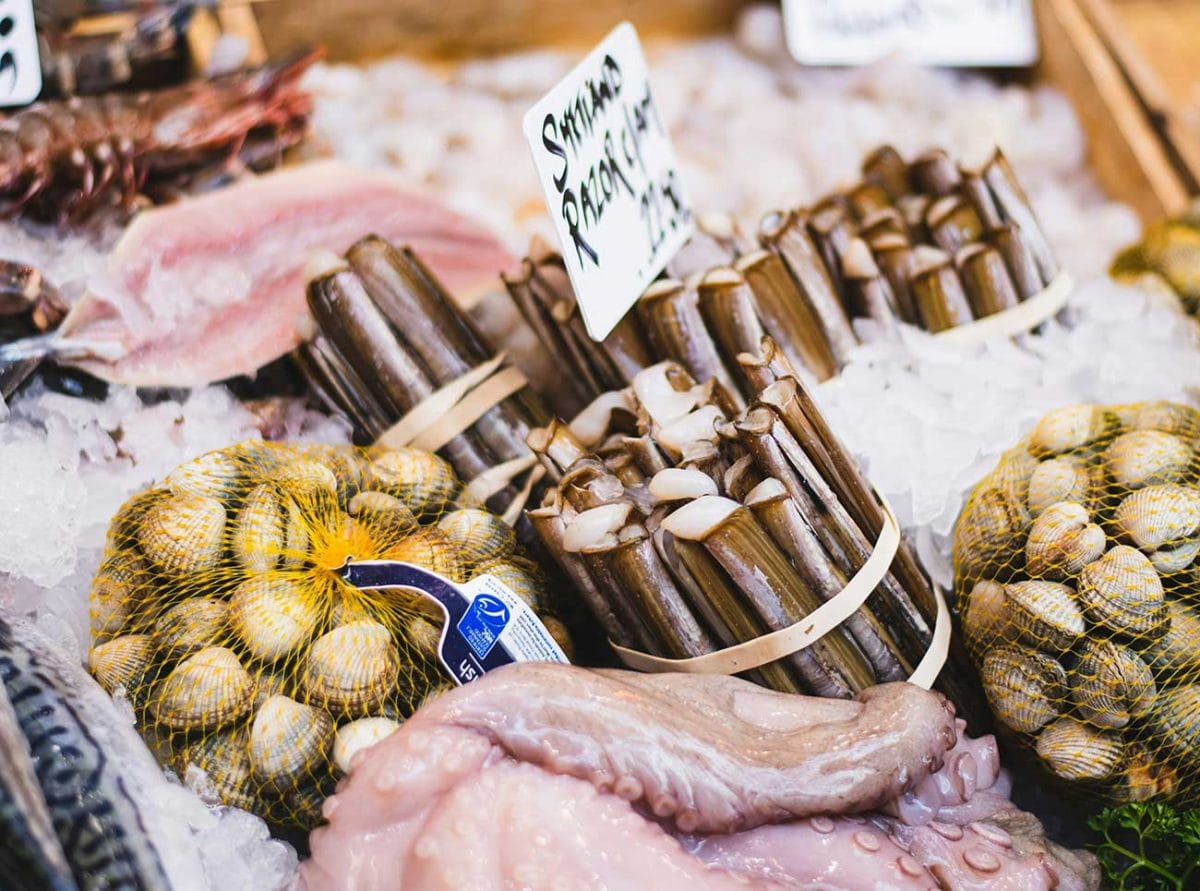
Cockles, Clams, and Other Shellfish
All shellfish can be added to a paella. Like mussels, you must carefully clean cockles, clams, and all other shellfish. Also, don’t forget to purge them if necessary. Other shellfish can be used, such as lobster, crab, or scallops. Feel free to choose your own ingredients!
Choosing the right fish and shellfish for a paella is about finding the right balance between the products, the flavors, and your budget. There is no need to accumulate dozens of types of fish and shellfish. Selecting just a few seafood products is enough to get an excellent paella. The most important thing is to master the cooking of these fish and shellfish! If you have tried any particular seafood combinations, don’t hesitate to share them with us!


