This Golden Crust Loved by Paella Enthusiasts
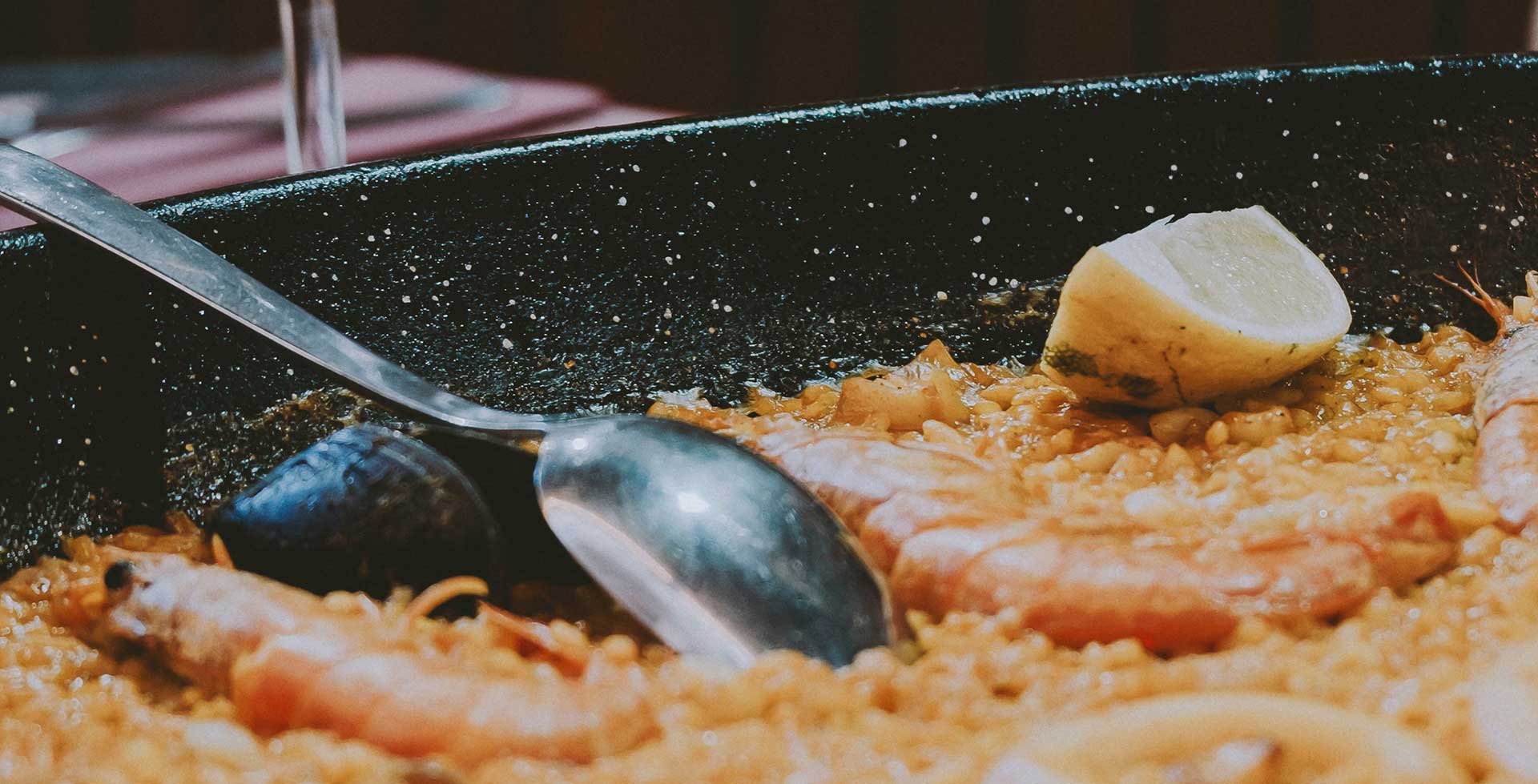
The socarrat refers to that thin crust of rice that cooks at the bottom of a paella pan. It is slightly toasted, crispy, and full of flavor. It is certainly the most complicated element to achieve when cooking paella. Some people think it’s a defect, but it is not at all; it is a goal to be achieved by cooks of this popular Spanish dish. Guests often even consider it the best part of the meal. Note that while a socarrat is created in paella, the term socarrat applies to any dish in which this rice crust forms at the bottom of the pan. Below, a Spanish cook is preparing a socarrat “galette” (disk).
What is the origin of the word socarrat?
In Valencian, “socarrat” means “singed” or “slightly burnt.” It represents an organic element that has been affected by fire over time. The material is just golden and has a specific crunchy texture. The socarrat is obtained just before the point where the material becomes burnt.
This term has passed into common language to designate the sticky, caramelized rice that forms at the end of paella cooking. When this rice crust is broken, it detaches into several crispy, flavor-concentrated pieces.
How is socarrat created?
La cuisson paëlla d’une paëlla se fait en plusieurs étapes distinctes. Elle nécessite dans un premier temps de cuire les aliments qui vont la composer. C’est seulement à la fin de la préparation qu’on insère le riz et démarre sa cuisson. Le riz profite ainsi des arômes déposés par les précédentes cuissons. La cuisson du riz se termine normalement lorsque le bouillon a été absorbé. C’est à ce moment précisément que le socarrat se crée. Par manque de liquide, le riz se trouvant au fond de la poêle prend une couleur dorée et s’agglomère à la poêle qui concentre les saveurs des ingrédients. Lorsque les sucres contenus dans l’amidon de riz se libèrent dans la poêle, et vont créer une couche caramélisée en étant en contact avec la chaleur.
How to achieve a good socarrat?
Identifying the moment the socarrat is formed
The socarrat is not easy to obtain because its achievement lies on the tiny border between cooked rice and burnt rice. Between the two, you get the socarrat! When you embark on preparing your first paella, it is often difficult to identify the moment the socarrat forms.
First, you must identify when the rice has reached its cooked state. Remember that the rice should be cooked over medium heat. Also, the broth must have disappeared. The socarrat cannot be achieved as long as there is liquid. When both of these conditions are met, you enter the socarrat formation stage. This is done over high heat for about one minute.
Mastering the heat
When the broth is absorbed, you enter the phase of creating the socarrat. You must allow the cooking to continue over high heat and stop it after about one minute. Crucially, do not stir the rice, and really count a maximum of one minute. Otherwise, you will get burnt rice.
It is simpler to achieve a socarrat with a gas burner than with a wood fire. Simply put, because the cook can control the power of the flame with a gas burner, which they cannot do with a wood fire. Gas burners have several rings that are easy to turn on or off separately.

Why is socarrat so appreciated?
The socarrat is appreciated by guests for the flavor it brings and its crispy texture. It is also adored by cooks because it is the most challenging element to achieve in a paella. The socarrat is an integral part of the traditions surrounding paella.


