History & Origins
Paella: emblem of Spanish culture
Where does this famous Spanish dish come from?
Origins of the term paella
Paella is one of the most popular and iconic dishes in Spain. It originated in the Valencia region in the 18th century. The name “paella” is directly related to the name of the container in which it is prepared. In fact, the word “paella” is of Latin origin and comes from the word “patella,” which means “small dish.”
The introduction of rice cultivation in Spain
The history of paella is also closely linked to that of rice produced in Spain. Rice was introduced by the Arabs during their occupation of the Iberian Peninsula in the 13th century. Until then, rice had not been cultivated in Spain. It is believed to have been introduced by the Arabs between the 13th and 14th centuries. It was ideally suited to the fertile lands of certain regions, including the Valencian region. It also benefited from the extensive agricultural know-how of the Arabs, who developed irrigation systems. Rice cultivation expanded considerably between the 13th and 15th centuries. Most of the area surrounding the city of Valencia was transformed into rice paddies. Rice became one of the most consumed foods in the region. Rice-based dishes are still cooked locally, but we are still a long way from paella as we know it. The term “paella” is not yet mentioned.
Industrialization at the origins of the paella pan
As we have seen, paella refers to the pan. Paellas, these steel pans with handles and therefore the popular dish, appear between the 18th and 19th centuries. Paellas were cooked by Valencian farmers. They mixed rice, vegetables, and various meats in a pan. All the ingredients were sourced from local crops. The dish was shared among family, colleagues, and friends. Paella was a convivial and shared dish.
The traditional recipe for Valencian paella uses chicken, rabbit, special green and white beans, tomatoes, Valencian Designation of Origin rice, olive oil, spices such as saffron and pimentón, and salt. Depending on the family, region, and sometimes village, the recipe evolves with the addition of new ingredients such as snails, artichokes, pieces of pork, etc.
The recognition of paella
In 2012, Valencian paella was awarded a Denominación de Origen, which means Designation of Origin and is the equivalent of the PDO (Protected Designation of Origin). This official recognition defines the ingredients permitted for the “Paella Valenciana” designation, thus preserving the authenticity of the traditional recipe.
Paella is internationally known. However, its recognition outside of Spain came late. This is linked to historical events such as the Retirada, or the post-war Spanish Republican exile. After the Civil War, many Spaniards fled Spain. They shared their culture, particularly in France. Later, Spaniards emigrated to France during the seasonal grape harvest. Finally, globalization has extended the recognition of paella.
Today, paella has become an iconic dish of Spanish gastronomy, known and appreciated throughout the world. It comes in many variations depending on the region and preferences. It is even the subject of industrial recipes with varying degrees of success. The history of paella perfectly illustrates how a simple peasant dish can evolve into a cultural and gastronomic symbol.
These key figures are provided for reference purposes only. Some data remain unverifiable. They are based on historical assumptions.
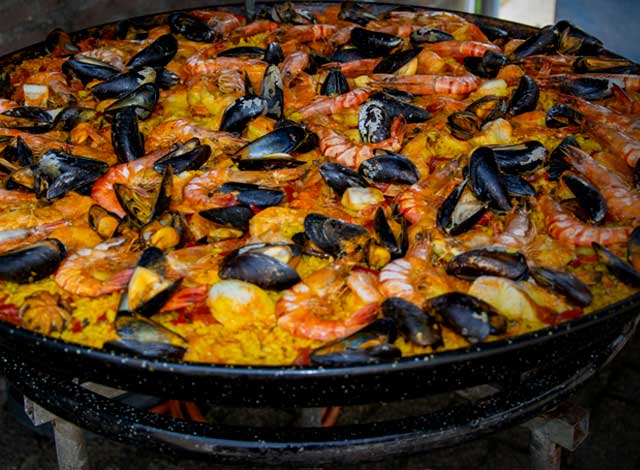
Find the essential utensils for cooking paella here!

WHICH WINES FOR A PAELLA?
What bottle of wine goes well with paella? Red, white, or rosé? A particular appellation or preferred grape varieties?