

Some paella pans can rust after a short time of not being used. Indeed, without proper maintenance, they can become covered with rust, especially if they are stored in a humid place. This practical guide explains how to effectively remove rust from a paella pan and the simple steps to take after each use to prevent its appearance.
How to Remove Rust from the Paella Pan?
To remove the rust that has proliferated on a steel paella pan, you need a non-abrasive sponge, soap, very hot water, a dry cloth, and vegetable oil. You might also need a little rust remover, also called a rust destroyer, if the rust is too widespread. Since this is a chemical product, it should only be used as a last resort.
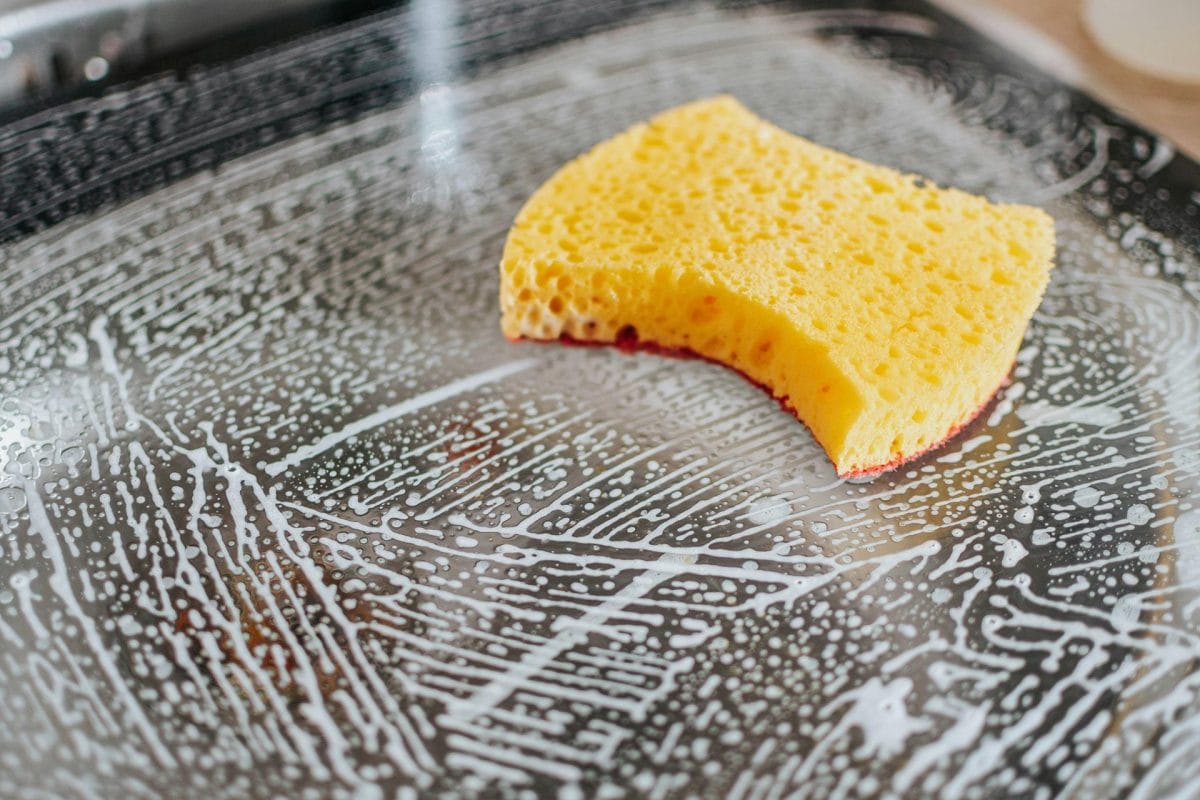
- Prepare a basin of hot water and soap.
- Rub with the non-abrasive sponge to remove the rust. Do not limit yourself to the rusted area; you must clean the entire surface of the pan. It is possible that early rust might not be visible to the naked eye. It may take some elbow grease to get rid of some rust spots. Take the time to eliminate it completely.
- If the rust does not disappear with soap and hot water, remove the water. Dry the pan. Then apply a little rust remover to the affected area. Let the product act according to the manufacturer’s instructions.
- Repeat step 2 by scrubbing with soap and hot water. Repeat this step if you used a chemical product. You must eliminate it to avoid any food contamination later.
- Dry the pan with a very dry cloth. Do not let the pan air dry; humidity and air are the perfect elements for generating rust.
- Finally, apply a little vegetable oil on a paper towel and rub the entire surface of the pan. This refers to the inside and the edges, as well as the back of the pan. You must prevent new rust from starting anywhere on the pan. This allows for a thin, protective layer of oil to be applied. The application of vegetable oil should be done regularly.
- Your pan is now ready to be stored in a closed, ventilated, and dry place while waiting for a new paella recipe.
How to Prevent Rust?
Opt for a rust-proof pan
Not all paella pans are affected by rust. They are not all designed with the same materials. You can find pans made of traditional steel, enameled steel, and stainless steel.
Obviously, stainless steel cannot rust. This type of pan requires very little maintenance after cooking. You just need to clean it with hot water, soap, and elbow grease.
The enameled pan is very common. It is identified by its speckled finish, which is actually a protective enamel layer with antioxidant properties. The pan is then protected against rust as long as the enamel is not damaged.
Finally, the traditional steel pan without a protective layer is the pan you are here for. It has certainly rusted… Don’t worry, it’s completely normal and fixable.
Season your pan
Don’t forget to apply a little vegetable oil to the entire paella pan after cleaning it well. It acts as a protective layer against oxidation reactions. This step greatly reduces rust problems.
Store the pan in the right place
Choose a dry place to store your paella pan. There are dozens of places where you can leave it. Some basements and garages are sometimes full of humidity, a factor conducive to the oxidation of the pan. You can also protect it in a cloth to limit humidity, or hang it so it is not in direct contact with the damp floor. In short, any tip to avoid humidity is an excellent one!
Why does rust form on the paella pan?
As with any steel object, the paella pan is likely to rust over time. When a metal is in prolonged contact with moisture and air, rust forms on the metal surface. Paella pans are often stored in garages, verandas, and other storage rooms subject to humidity.
Rust is not inevitable for a steel paella pan. One could even say that it is common, almost normal. Careful cleaning, regular application of vegetable oil, and storage away from humidity are usually enough to prolong its lifespan. By taking a few simple precautions, you can continue to cook your paellas while avoiding new rust deposits on the pan.


